

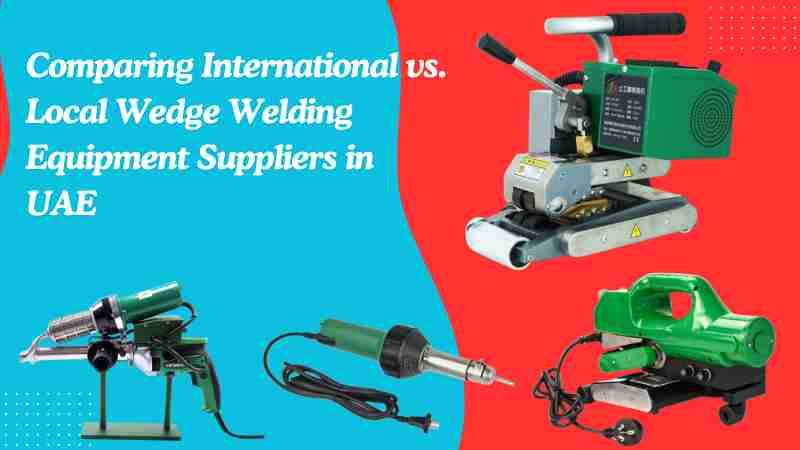
The United Arab Emirates’ construction, waterproofing, and geomembrane installation sectors operate within a unique commercial ecosystem where international manufacturers, regional distributors, and local suppliers coexist, each offering distinct value propositions to contractors seeking quality welding equipment. This marketplace complexity creates both opportunities and challenges for businesses investing in thermoplastic welding technology essential for roofing, waterproofing, environmental protection, and infrastructure projects throughout Dubai, Abu Dhabi, and other emirates. Understanding the comparative advantages, limitations, cost implications, and strategic considerations when choosing between international versus local equipment suppliers proves essential for making informed purchasing decisions that balance immediate needs against long-term operational requirements. This comprehensive analysis examines the key factors differentiating international and local supplier options, providing frameworks that enable contractors, waterproofing specialists, and facility managers to evaluate alternatives systematically while selecting suppliers best aligned with their specific circumstances, project requirements, and business objectives.
International suppliers operate through various business models:
Direct Manufacturer Sales: Some major welding equipment manufacturers maintain UAE sales offices enabling direct customer relationships. This model provides unfiltered access to manufacturer expertise, complete product portfolios, and corporate resources but may lack local market nuance and personalized service smaller organizations value.
Authorized Regional Distributors: International manufacturers frequently establish exclusive or non-exclusive distribution agreements with UAE-based companies holding specific geographic territories. These distributors combine manufacturer backing with local presence, ideally offering advantages of both approaches while avoiding limitations of either extreme.
International Trading Companies: Some suppliers operate as international traders importing equipment from multiple manufacturers without exclusive relationships. This model provides broad product access and competitive pricing but may offer limited manufacturer support, warranty administration complexity, and uncertain long-term viability.
Online International Vendors: E-commerce platforms enable direct equipment purchase from overseas suppliers, often at attractive pricing. However, this approach sacrifices local support, warranty service, training availability, and the consultation valuable for complex equipment selections.
Local options similarly encompass various business models:
Established Local Distributors: UAE-based companies with decades of market presence, manufacturer relationships, and comprehensive support infrastructure represent the traditional local supplier model. These organizations combine market knowledge with established operations supporting equipment throughout its lifecycle.
Specialized Geosynthetic Contractors: Some installation contractors diversify into equipment sales, leveraging their operational expertise to advise customers while generating additional revenue streams. This model provides application-specific knowledge but may have limited brand portfolios and potentially conflicting interests between equipment sales and competitive contracting relationships.
Startup Equipment Importers: New market entrants offering competitive pricing and hungry for business can provide value, though concerns about long-term viability, manufacturer relationships, and support capabilities warrant careful evaluation.
Multi-Industry Equipment Dealers: General construction equipment suppliers sometimes add welding machines to broader portfolios. While convenient for customers seeking consolidated vendor relationships, these generalists may lack specialized expertise and focused support that dedicated suppliers provide.
Equipment provenance significantly affects performance and longevity:
International Suppliers: Direct manufacturer relationships or authorized distribution typically ensures product authenticity—genuine equipment meeting design specifications rather than counterfeits or substandard copies unfortunately present in some markets. International suppliers with established reputations have strong incentives maintaining quality standards protecting their brands.
Local Suppliers: Reputable local suppliers with authorized manufacturer relationships offer equivalent authenticity assurance, while less-established suppliers may present higher risk of counterfeit or gray-market equipment lacking proper warranty coverage or meeting advertised specifications. Due diligence verifying authorization with manufacturers directly proves prudent for substantial investments.
Verification Methods: Request documentation proving authorized dealer status, verify equipment serial numbers with manufacturers, and examine build quality and finish indicative of genuine versus counterfeit products. Working with an established wedge welding machine provider Dubai with transparent manufacturer relationships reduces counterfeit risk while ensuring equipment authenticity.
Cost structures differ between supplier types:
International Suppliers: Direct manufacturer purchases eliminate distributor margins, potentially reducing equipment costs by 10-20% compared to multi-tier distribution. However, savings may be offset by international shipping costs, import duties, and lack of included services that local distributors bundle into pricing.
Local Suppliers: Local supplier pricing typically includes distributor margins but also incorporates value-added services including delivery, installation support, training, and initial service—elements requiring separate budgeting when purchasing internationally. Total cost of ownership rather than purchase price alone provides accurate cost comparison.
Hidden Costs: Consider all cost elements including shipping and logistics, import duties and customs clearance, installation and commissioning, operator training programs, initial spare parts inventory, warranty registration and administration, and ongoing technical support. Comprehensive accounting often narrows or eliminates apparent price advantages of lower-cost international suppliers.
Payment Terms and Financing: Local suppliers may offer flexible payment terms, local currency pricing avoiding foreign exchange exposure, and equipment financing relationships with UAE banks. International suppliers typically require prepayment or letters of credit—less favorable terms for customers preferring to preserve working capital.
Post-purchase support significantly affects equipment value:
International Suppliers: Overseas suppliers may provide excellent technical documentation and remote telephone support but struggle with on-site service requiring technician mobilization from abroad—costly and time-consuming when equipment failures threaten project schedules. Some manufacturers maintain regional service centers, though coverage may not extend comprehensively throughout UAE.
Local Suppliers: Quality local suppliers maintain service technicians, diagnostic equipment, and workshop facilities enabling rapid response to equipment issues. This local presence proves invaluable when equipment problems arise during critical project phases where delays incur substantial costs. Response times measured in hours rather than days or weeks distinguish local support value.
Preventive Maintenance: Regular equipment maintenance extends operational life while preventing failures. Local suppliers can provide scheduled maintenance services, while international supplier customers must either perform maintenance internally, engage third-party service providers, or forego proper preventive care—potentially shortening equipment life and increasing failure risk.
Emergency Support: Equipment failures during projects often constitute emergencies requiring immediate attention. Local suppliers can typically respond same-day or next-day, while international suppliers face logistical challenges potentially causing week-long delays—creating project disruptions far exceeding any equipment cost savings.
Parts access affects equipment uptime:
International Suppliers: Ordering spare parts from overseas manufacturers requires planning ahead, as shipping may require 1-3 weeks depending on origin and shipping methods. While express shipping can reduce delivery times, costs often reach 30-50% of part values—economics favoring local parts sourcing when available.
Local Suppliers: Reputable local suppliers maintain spare parts inventory for equipment they sell, providing immediate or next-day parts availability. Critical components including heating elements, pressure rollers, temperature sensors, and control boards should be locally stocked, minimizing equipment downtime from component failures.
Parts Authenticity: Genuine manufacturer parts ensure proper fit, performance, and longevity, while aftermarket alternatives may offer cost savings but uncertain quality and compatibility. Local suppliers with manufacturer authorization provide genuine parts assurance, while international purchases—particularly through online channels—may present counterfeit parts risk.
Equipment effectiveness depends on proper deployment:
International Suppliers: Some international manufacturers provide training programs, though scheduling, location, and language considerations may limit UAE customer access. Training might require travel to manufacturer facilities or waiting for regional training sessions with associated costs and logistics challenges.
Local Suppliers: Quality local suppliers conduct training at customer facilities using customer materials and addressing specific application requirements. This customized, convenient training proves more effective than generic programs while avoiding travel costs and schedule disruptions. Local trainers familiar with UAE conditions can address region-specific considerations that international programs might overlook.
Ongoing Education: Technology evolution, new materials, and technique refinement create ongoing training needs. Local suppliers can provide refresher training, new operator onboarding, and updates on emerging capabilities more readily than international suppliers requiring complex logistics for every interaction.
Supplier understanding of local conditions affects recommendations:
International Suppliers: While possessing deep product knowledge, international suppliers may lack familiarity with UAE’s unique climate challenges, regulatory environment, material preferences, and industry practices. This knowledge gap can result in suboptimal equipment recommendations or advice requiring local adaptation.
Local Suppliers: Experienced UAE suppliers understand regional conditions intimately—how extreme heat affects welding parameters, which membrane brands contractors commonly use, what quality standards Dubai Municipality enforces, and how seasonal weather patterns influence project scheduling. This market knowledge informs recommendations ensuring equipment truly suits local applications.
Project References: Local suppliers can provide UAE project references enabling customers to visit completed installations, speak with local contractors using recommended equipment, and evaluate performance under actual regional conditions. International suppliers may offer international references but not locally-verifiable examples demonstrating UAE-specific suitability.
Warranty coverage provides important protection:
International Suppliers: Equipment warranties typically span 1-2 years covering manufacturing defects, but claiming warranty coverage from overseas manufacturers involves complex processes potentially requiring equipment return to origin for repair or replacement—impractical for large machines. Warranty disputes with international suppliers may involve jurisdiction issues complicating resolution.
Local Suppliers: Authorized local distributors often administer manufacturer warranties, providing single point of contact for claims, facilitating equipment service or replacement, and leveraging distributor-manufacturer relationships to resolve disputes. This warranty administration simplifies claiming coverage while ensuring responsive service.
Extended Warranties: Some suppliers offer extended warranty programs beyond manufacturer coverage. Local suppliers can more readily support extended warranties through their service capabilities, while international supplier extended warranties may prove difficult to utilize due to service logistics challenges.
UAE equipment requirements affect supplier suitability:
International Suppliers: Equipment must meet UAE electrical standards, safety requirements, and any industry-specific regulations. International suppliers may not fully understand local requirements or provide documentation in formats UAE authorities expect, potentially causing import clearance issues or equipment rejection during inspections.
Local Suppliers: Established local suppliers understand UAE regulatory requirements and ensure equipment meets applicable standards before sale. They can provide compliance documentation in appropriate formats, facilitate inspections if required, and address any regulatory issues leveraging their market experience.
Import Procedures: Direct international purchases require customers to handle customs clearance, import documentation, and compliance verification—processes unfamiliar to many contractors and potentially problematic without specialized knowledge. Local suppliers manage these procedures as routine business operations.
Sophisticated procurement strategies may utilize both supplier types:
Primary Equipment Internationally, Support Locally: Some contractors purchase primary welding machines directly from manufacturers internationally, securing pricing advantages, while contracting with local service providers for installation, training, maintenance, and repairs. This hybrid approach requires finding qualified local service partners—sometimes challenging for specialized equipment.
Commodity Items Internationally, Specialized Equipment Locally: Basic equipment and consumables available from multiple sources might be sourced internationally for cost savings, while specialized or business-critical equipment purchases prioritize local suppliers for comprehensive support. This tiered approach optimizes costs while ensuring critical capabilities receive appropriate support.
Pilot Purchases Locally, Volume Internationally: Contractors might acquire initial equipment locally to evaluate suitability with full support, then purchase additional units internationally if satisfied with performance and comfortable managing with reduced support. This staged approach balances learning needs against cost optimization.
Systematic evaluation supports optimal choices:
Business Maturity and Capabilities: Established contractors with experienced equipment technicians, comprehensive spare parts inventory, and deep operational expertise can successfully deploy internationally-sourced equipment, while newer businesses benefit from comprehensive local supplier support developing internal capabilities.
Equipment Criticality: Business-critical equipment where failures cause severe disruptions warrants prioritizing local supplier support, while backup equipment or tools for occasional use might accept international sourcing with associated support limitations and cost savings.
Budget Constraints: Organizations with severe budget limitations might accept international sourcing compromises, while businesses able to invest appropriately should consider total cost of ownership including support value rather than focusing exclusively on purchase price.
Project Portfolio: Contractors handling major projects with sophisticated clients demanding comprehensive quality documentation benefit from local suppliers providing training, consultation, and ongoing support, while smaller operations working on less complex projects might manage with international equipment and minimal support.
Complete capabilities often require multiple technologies:
Integrated Supplier Portfolios: Local suppliers offering comprehensive portfolios including wedge welding, extrusion welding, and testing equipment enable simplified vendor relationships and coordinated support. Organizations needing hot air welding system UAE capabilities alongside primary wedge welding equipment benefit from suppliers offering complete solution portfolios rather than requiring multiple vendor relationships with associated coordination complexity.
Specialized vs. General Suppliers: Some suppliers specialize in specific equipment categories developing deep expertise, while others offer broad construction equipment portfolios providing convenient one-stop shopping. Neither approach inherently superior—appropriateness depends on customer priorities regarding specialized knowledge versus consolidated vendor relationships.
Supplier selection creates relationships extending beyond individual transactions:
Supplier Longevity and Stability: Business relationships spanning equipment operational life (5-10+ years) require supplier financial stability and market commitment. Established suppliers with decades of UAE presence demonstrate sustainability, while newer entrants—whether local startups or international companies newly entering UAE market—present higher relationship risk.
Technology Evolution: Suppliers with strong manufacturer relationships provide customers access to advancing equipment capabilities, early notification of new products, and transition support when technology evolution makes equipment upgrades beneficial. These benefits accrue through long-term relationships rather than transactional purchasing.
Loyalty Programs and Preferences: Consistent business with proven suppliers often yields benefits including preferential pricing, priority service during high-demand periods, extended payment terms, and advance notice of special programs. These loyalty advantages develop through sustained relationships that transactional, lowest-price-focused purchasing strategies cannot access.
Not all factors carry equal importance:
Critical Success Factors: Identify factors absolutely essential for success—potentially including local service availability, operator training quality, or specific technical capabilities—and eliminate suppliers not meeting these requirements regardless of other advantages.
Important but Negotiable Factors: Distinguish between important considerations and truly critical requirements. Slightly higher pricing, for example, might be acceptable if offset by superior training and support, while absolute requirements deserve no compromise.
Individual Circumstances: Decision-appropriate for one organization may not suit another due to differences in technical capabilities, risk tolerance, financial resources, and strategic priorities. Resist simplistic “always choose local” or “always buy international” rules in favor of thoughtful evaluation considering specific circumstances.
The choice between international versus local wedge welding equipment suppliers in UAE involves complex tradeoffs encompassing pricing, support availability, product quality, market knowledge, and long-term relationship value. Neither option is universally superior—optimal choices depend on buyer-specific factors including technical capabilities, budget constraints, equipment criticality, and support requirements varying across organizations and situations.
By systematically evaluating comparative advantages and limitations across key decision dimensions, UAE contractors, waterproofing specialists, and geomembrane installers can make informed supplier selections balancing immediate costs against long-term value. The most successful procurement strategies recognize that equipment purchases represent investments in business capability rather than mere cost centers, with supplier choice significantly affecting operational effectiveness, project quality, and competitive positioning throughout years of equipment service supporting business success in UAE’s dynamic construction and infrastructure development sectors.

No Related Post


